Other Stuff Exists

Don't get too comfortable with the familiar–other stuff exists, so go explore!

Welcome to Equestria

Posted by Tracy Poff on April 17, 2013

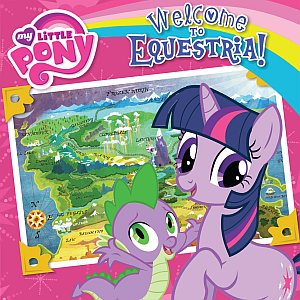
Welcome to Equestria coverShining Armor and Princess Cadance, the new rulers of the Crystal Empire, have been invited to visit towns all over Equestria. As they tour the land, they write letters to Twilight Sparkle about their journey, which will end in Ponyville, where Twilight lives.

Welcome to Equestria by Olivia London is a children’s picture book featuring characters from My Little Pony: Friendship is Magic. The story is told in two ways: first, by narrative recounting the events as Shining Armor and Princess Cadance travel; second, by the letters they write to Twilight.

The narrative is simple, as is appropriate for a children’s book, but also, frankly, pretty boring. The letters have much more character. Compare:

“They are delighted to visit Princess Celestia and Princes Luna at Canterlot Castle, and enjoy some time in the city together.”

vs.

“We arrived in Canterlot today after a lovely send-off in the Crystal Empire. It was wonderful to enjoy Canterlot knowing that it is now safe from that evil Queen Chrysalis!”

Both are simple and direct, but the second, from the letter, is a lot more fun to read.

The story isn’t anything special–there’s not any plot to speak of, just a sequence of descriptions of places Shining Armor and Cadance. The only thing tying things together is that the two pick up gifts as they travel, and give them to Twilight and her friends at the end. There’s nothing wrong with the book being very simple, but it could have been better. The show itself manages much more interesting stories with being appreciably more complicated to understand.

Welcome to Equestria sample

Of course, for a picture book, the writing is only half the story. Welcome to Equestria‘s artwork matches the show, so it’s nice enough, but it mostly consists of scenery and the occasional character posing, which isn’t very interesting to look at. Also, the art is very separated from the text, and seems somewhat superfluous. Nice to have, but not important. In a really good picture book, the text and art work together to tell the story, but that doesn’t happen in Welcome to Equestria.

Welcome to Equestria isn’t bad, and kids that like the show will probably like the book, but it’s no classic of children’s literature, either. Pick it up for fans, but otherwise there are probably better choices.

Welcome to Equestria is available in paperback or for the Kindle.

Posted in Book, Review | Tagged: , , , | Leave a Comment »

Action Comics 1938 (issues #1-7)

Posted by Tracy Poff on January 16, 2013

In June 1938, Detective Comics #16 had a new companion: Action Comics #1. This first issue is famous for introducing Superman, as well as for being the most valuable comic in existence, a single copy having sold on November 30, 2011 for $2.16 million.

Action Comics is an anthology work, like Detective Comics, and features several other comics per issue, besides Superman. Of particular interest is Zatara which also appears in the first issue. The full contents of the first issue are:

  • “Superman” by Jerry Siegel and Joe Shuster
  • “Chuck Dawson” by H. Fleming
  • “Zatara” by Fred Guardineer
  • “South Sea Strategy” (a short story)
  • “Sticky-Mitt Stimson” by Alger
  • “The Adventures of Marco Polo” by Sven Elven
  • “Pep Morgan” by Fred Guardineer
  • “Scoop Scanlon, Five Star Reporter” by Will Ely
  • “Tex Thompson” by Bernard Baily
  • “Stardust” (a page of celebrity trivia)

Most of these are series, and continue in future issues. I’ll not go into great detail about most–they’re the same sort of stories that run in Detective, largely a mix of Westerns and detective stories. Let’s look at a couple, though.

Superman

How could I ignore the first appearance of Superman? In the very first issue, there’s a lot of work done to establish the character, including both his abilities and his personality. Allow me to make an extended quotation from the first page:

When maturity was reached, he discovered he could easily: leap 1/8th of a mile; hurdle a twenty-story building… raise tremendous weights… run faster than an express train… and that nothing less than a bursting shell could penetrate his skin! Early, Clark decided he must turn his titanic strength into channels that would benefit mankind. And so was created… Superman! Champion of the oppressed. The physical marvel who had sworn to devote his existence to helping those in need!

Superman comes from an unnamed planet which had been destroyed by old age. His father, a scientist, sent him away in a hastily-crafted spaceship, and the baby Superman was found by a passing motorist, and put in an orphanage. The boy was named Clark Kent, and even when young, he was very strong. As he grew to maturity, he found he had amazing powers, which we are told is usual for the people of his race.

Having established Superman’s powers, and sketched his history, the first story begins, and it’s a noteworthy story: Superman has (somehow) discovered that a woman who is set to be executed is innocent, and has secured a confession from the real murderer. Armed with this, he strong-arms his way into the governor’s estate, so that the governor can halt the execution. Even from the first pages, Superman is established as the champion of the oppressed, caring for the wellbeing of the people. This sets him in distinct opposition to many other crimefighters of the day, such as Siegel and Shuster’s own Slam Bradley, a private detective superficially similar to Superman, but who is in it for the money and thrills.

Action Comics 6 (November 1938) - SupermanSuperman continues to show concern for the well-being of the common man as the comic continues. Later in the story, he stops a wife-beater, and the end of the first issue, and continuing into the second, he fights political corruption, leading to him single-handedly stopping a war. He captures the generals of the opposing armies, and delivers an ultimatum: “I’ve decided to end this war by having you two fight it out between yourselves.” He spends the third issue fighting for better working conditions for mine-workers. In the following issues, Superman retaliates against a crooked football coach by playing for the opposing team, saves a town from being flooded by a burst dam, stops a man who is pretending to be Superman’s agent from exploiting his good name, and saves a failing circus by joining up as a strongman.

Superman’s not exactly a boy scout, though–he joins the football team by disguising himself as one of its players, keeping the real player drugged the entire time, and he’s not afraid to use the threat of force to get what he wants.

Superman’s definitely the star of Action Comics, although he doesn’t appear on the cover again this year, after the first issue. He won’t reappear on the cover until issue #7, after which he begins appearing regularly.

Zatara

He’s probably more famous for being the father of Zatanna, but Zatara, too had his own comic series, starting in Action Comics #1. The master magician fights crime using his magical powers, accompanied by his servant, Tong. Like his daughter, Zatara casts his spells by speaking them backwards, like “uoy era won ni ym rewop!”. One of the stranger recurring elements in the comic is Zatara’s penchant for turning people–criminals, Tong, even himself–into the oddest things. For example:

Zatara frequently uses the power of astral projection to travel invisibly and spy on his enemies, and he uses his powers for more frivolous things, too, like turning a meal that Tong didn’t like into chicken, which he preferred. It’s not clear to me what the limits of his powers are–in the sixth issue, he summons up a whole army to fight for him. I’m guessing that the limit is “however strong he needs to be to get out of the trouble he’s in”.

Zatara’s stories aren’t substantially different from the other stories in the magazine, or the ones that run in Detective, if you ignore his use of magic. I enjoy them, though, and it’s amusing to see the absurd things he uses his magic for, so I’d place Zatara as my second-favorite comic in Action Comics, after Superman.

Conclusion

The only comics in Action Comics that are to my taste, this year, are Superman and Zatara, and they are pretty good, particularly as compared to their contemporaries. Superman’s popularity really takes off, and he’ll be in other comics in the near future–particularly in his own magazine, Superman, and in World’s Finest Comics, in which Batman will also star. Of course, that won’t be all–according to Comic Vine, Superman appears in 9270 separate comic issues, just under Batman’s 9491 appearances. With that many issues, you could read a Superman comic every day for over 25 years without running out, even if they never published another comic. What’s the source of Superman’s massive popularity? I won’t speculate.

Whatever else you may think of Superman, he’s clearly left his mark on comics. It’s well worth reading these early issues of Action Comics, to see where it all began.

Posted in Comic Issue, Review | Tagged: , , | Leave a Comment »

Detective Comics #3-10 (May-December 1937)

Posted by Tracy Poff on January 13, 2013

I thought that, rather than writing a separate post for each issue of Detective Comics, it might be more instructive to collect my opinions on several issues. So, let’s look at the next eight issues, numbers 3-10, published between May and December 1937.

Speed Saunders

These stories declined in quality somewhat. The stories varied from boring to unbelievable, though some were merely mediocre. Two stories stand out.
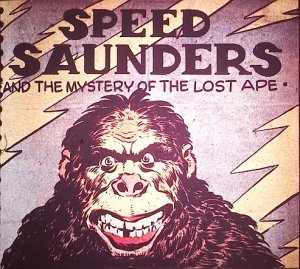
Speed Saunders and the Mystery of the Lost Ape

In Issue #6, we have a story about a human brain being put in an ape’s body. Mysteriously, the body appears to retain the ape’s memories and personality, the human brain contributing only increased intelligence. The ape becomes violent, and ultimately throws itself and its creator off a pier, drowning them both. This story wasn’t actually very good, but it was something of a departure from the norm. A mad scientist putting a human brain in an ape’s body? That’s the kind of absurdity I can appreciate.
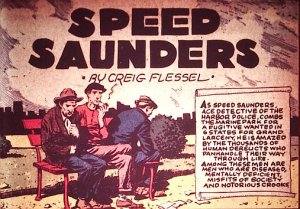
Speed Saunders (from DC 9)

In Issue #9, Speed thinks an old hobo looks suspicious, so he follows him around, very ineptly. Ultimately, it turns out that the man was an undercover cop, and Speed is rescued from his own incompetence by the crowd of police the undercover man brought in. But, of course, Speed is the hero, so nobody mentions that he was impeding an investigation and endangering the undercover cop.

Cosmo, the Phantom of Disguise

Another comic that isn’t really worth the time. I did somewhat enjoy the device in Issue #5–the criminals were smuggling drugs by putting them in torpedoes and shooting them towards shore, where their confederates would retrieve them, thus neatly bypassing inspections at the harbor. Still, the stories tend to be very predictable, and so not very interesting. In several, Cosmo doesn’t even use a disguise, which is rather his whole gimmick, making Cosmo into just another generic detective story.

The Claws of the Red Dragon

This storyline finishes in Issue #8, and the hero, Bruce Nelson, begins other adventures with Issue #9. First things first, though: “The Claws of the Red Dragon” isn’t very good. It, by virtue of being eight issues long, avoids the pitfall that most comics in Detective Comics fall into, which is that they don’t have the time to adequately develop their stories, but it has other problems. First, it is fairly dull, most of the time. Second, and perhaps more importantly, it is incoherent.

I am guessing that “The Claws of the Red Dragon” wasn’t originally intended to launch the career of Bruce Nelson as a sleuth. In the beginning, Nelson just seems to be a regular guy. The other two guests in the restaurant, Sigrid and her father, are clearly introduced as strangers in the first issue, and Nelson remarks that it’s a very strange coincidence that the stranger has a ring identical to his own. By the end, Nelson and von Holtzendorff have known each other for some time, and it was in fact von Holtzendorff who gave Nelson the ring. Also, by the end of the story, Nelson is known to the Chinese villains, having apparently foiled some plot of theirs in the past. All this adds up to a poorly planned story, which was modified after it began, in order to provide a hook for a sequel.

After “The Claws of the Red Dragon” finishes, Nelson stars in a two-issue story, in Issues #9 and #10, called “The Blood of the Lotus”. This story, too, features Chinese villains, and Nelson himself now has a Chinese servant. It’s a little better, perhaps, than “The Claws of the Red Dragon”, but it’s still not very interesting.

Spy!

At the end of the first story, Sally is hired as a spy, too, and becomes a co-star of the comic. The stories are decent, if unspectacular. I do appreciate that, although the stories are episodic, there is some continuity. We see it more, starting with Issue #11, where they spend several issues in Paris as a result of the events of Issue #10.

Sally gets her share of heroic moments, I suppose. She’s still treated as somewhat inferior to Bart, and she doesn’t always have a complete plan, but she does show some competence as a spy, from time to time.

Buck Marshall

Maybe I just don’t like Westerns, but these stories are incredibly boring. Enough so that I stopped reading them, after Issue #9. The main problem is that they are entirely predictable. The basic format of each story is, essentially, this: Buck is on his way to see his friend the sheriff, when something crime-related happens–usually some shots are fired, or he comes across another man on horseback. Then, when he reaches the sheriff, it turns out that he’s just in time–the sheriff is heading out to investigate a crime that has just been reported. Buck scouts around a bit, and the real criminal almost always turns out to be the one who reported the crime–they’re always trying to pin crimes they committed on their rivals.

The stories are not merely repetitive and predictable, but also pretty dull, so my reading experience should be improved substantially by skipping these.

Slam Bradley

If I’m giving out an award for most improved, it goes to Slam Bradley. The stories aren’t that different, and they really still aren’t that good, but I’ve begun enjoying them much more than I did the first couple. Slam is still an absurd, hyper-masculine fool, but the comics began to make fun of that, a bit, and they are over the top in an amusing, rather than infuriating, way.

Of note is that the third issue’s Slam Bradley story is drawn by Jim Bettersworth, and the art is much worse. Fortunately, Shuster returns in the next issue.

Point of interest: we learn, in Issue #8, that Slam and Shorty live in Cleveland. Together. Sharing one bed. And wearing matching pajamas, too. You’d think that would put a cramp in Slam’s style, but I guess it works for him. Shorty gets a great line, there: upon being awakened by Slam, and told that a criminal has escaped, he replies “I don’t care if the planet has escaped from its orbit–all I want to do is sleep!”.

Others

Mr. Chang returns for a few issues, and his stories aren’t especially bad, but they aren’t especially good, either.

A new comic, Larry Steele, begins in Issue #5. The first story is a five-issue story involving a mad scientist, and it’s boring. Not a great addition to the magazine.

There are lots of short comics by Alger, which are of fairly consistent, if not great, quality. They’re generally predictable, though occasionally clever.

Conclusion

The first year of Detective Comics is unimpressive, with a few decent comics, and quite a few very bad ones. My favorite for the year has to be Slam Bradley, which is fun, even if it’s not deep. Both Spy! and Slam Bradley showed improvement, over the course of the year. Most of these early comics are just not going to be satisfying to a modern reader, though some are not without merit. Unless you’re reading them out of interest in the history of comics, though, I’m afraid I’d have to recommend against reading these–they just aren’t worth the time, given the multitude of better, later comics.

So, that’s it for 1937! Batman won’t show up in Detective Comics until 1939, but 1938 does mark the beginning of Action Comics, which means the introduction of Superman. I’m looking forward to it!

Posted in Comic Issue, Review | Tagged: | Leave a Comment »

Detective Comics #2

Posted by Tracy Poff on December 19, 2012

We’ll see some new stories as well as some continuations and conclusions from the first issue in Detective Comics #2, published in April 1937.

Detective Comics 2 - Cover

Slam Bradley: Skyscraper Death

Slam Bradley - Skyscraper Death - Title

Story by Jerry Siegel. Art by Joe Shuster.

In this second installment, Slam is implicated in a murder. With the help of Shorty, he clears his name and catches the bad buys.

There’s not much to say about this one. If you read the first Slam Bradley story, you’ve as good as read this one. Just replace the evil Chinese with evil racketeers. However, do take a good look at that title image. I have no idea which one is supposed to be Slam. They could be twins. In the next frame, they look like they’re about to kiss:

Slam Bradley - Skyscraper Death - An Intimate Moment

Overcome by the power of their own manliness, I assume.

Really, I think that Slam Bradley is one of the worst sorts of heroes–he’s nothing but glorification of bravado and hypermasculinity. Not the kind of person I’d want to meet.

Buck Marshall, Range Detective: The Sage City Bank Holdup

Buck Marshall - The Sage City Bank Holdup - Title

By Homer Fleming.

Buck Marshall is asked to investigate a dam that’s been blown up, and uncovers a criminal gang.

This one is similar to the first Buck Marshall story–Buck investigates, and the real bad guys turn out not to be the ones originally implicated. It’s the same formula, but I think this one is a little better done.

Gumshoe Gus: The Disappearing Duck

Gumshoe Gus - The Disappearing Duck - Title

By Bill Patrick.

Another comedy bit, of course. Gus is sent to investigate the disappearance of a man’s beloved pet duck, Gloria. As it turns out, she’s run away to be with the duck of her dreams–Donald Duck.

This Gumshoe Gus story is even more absurd than the first one, and the jokes fall a bit flat.

Bret Lawton: The Peruvian Mine Murders Part 2

Bret Lawton - The Peruvian Mine Murders Part 2 - Title

Bret traipses around for a while, and at length discovers that the supposed Inca chief is actually Spider Malone, from the United States.

This is a disappointing conclusion to the Bret Lawton story from the first issue. Bret just suddenly reveals, in the last panel, that the Inca chief who’d captured them was Spider Malone, from the United States. How did he deduce this? The ‘chief’ made a (very weak) joke, which Bret identified as “a good old American wise crack”. Bret also manages to miraculously draw a circle of cyanide around the area where he’s buried up to his neck in sand, in order to fend off an army of ants. In fact, he does one right after the other:

Bret Lawton - The Peruvian Mine Murders Part 2 - Ants

Splendid.

Room Fifteen

Room Fifteen - Title

By Alger.

A rhyming comedy story about a large group of men who check into room fifteen at a hotel.

This one’s weaker than “Eagle-Eyed Jake”, from the last issue. Not worth a second look.

Bart Regan, Spy: The Balinoff Case Part 2

Bart Regan, Spy - The Balinoff Case Part 2 - Title

Story by Jerry Siegel. Art by Joe Shuster.

Picking up where the previous installation left off, this story sees Bart rescue Sally from her fix, only to drop her off at her home and tell her he hopes never to see her again. Incensed, she calls up an old suitor, and arranges to marry him the very next day. Will Bart stop the wedding? To be continued…

Once again, I think that the Bart Regan story is superior to the Slam Bradley story. Bart is still a jerk, and Sally is definitely going a bit far in arranging a sudden wedding in hopes that Bart will stop it, but you can’t help but feel for her, at least a little.

Mail Order Murphy

Mail Order Murphy - Title

A two-page comedy piece about a detective with a mail-order diploma who ‘detects’ a pie, and is jailed for stealing it.

The illustrations are a little silly, but the only joke is at the very end, where he is caught stealing a pie–the story’s not worth it.

Mr. Chang and the Narcotic Ring

Mr. Chang and the Narcotic Ring - Title

By Win.

Mr. Chang, master sleuth, is called in to investigate a narcotic ring. He threatens a laundry man to tell him who sells him drugs, then follows the dealer to his hideout, where he rescues two reporters that the criminals had kidnapped. With the help of the police, who arrive just in time, the gang is brought to justice.

This story is too straightforward. Mr. Chang is given the case, investigates, fights the bad guys, and wins. End of story. There are no twists or surprises of any kind, and there’s nothing interesting about the crime. On top of that, Mr. Chang and his servant are pure stereotypes, and it’s uncomfortable to read, used as I am to modern works with modern sensibilities. Take the final panel, for example:

Mr. Chang and the Narcotic Ring - End

It’s nice that there’s a story with a Chinese hero, rather than villain, but this one isn’t exactly a progressive dream of an egalitarian society, either.

Cosmo, the Phantom of Disguise: The Olive Oil Counterfeiters

Cosmo, the Phantom of Disguise - The Olive Oil Counterfeiters - Title

Illustrated by Sven Elven.

Frustrated by counterfeiters, the police call in Cosmo. Between a bit of sleuthing and a clever disguise, Cosmo discovers that the counterfeiters have been transporting the fake bills in olive oil boxes, and captures the crooks.

Like the first Cosmo story, we see Cosmo pitted against a criminal who also disguises himself. Our hero is cleverer, though, and he gets his man. The story’s not bad–better than the first one, I think. Still nothing to write home about, though.

The Claws of the Red Dragon Part 2

The Claws of the Red Dragon Part 2 - Title

In this installment, Nelson is driven by his captors to a remote location and left to his own devices. Upon making his way back to civilization, Nelson notifies the police of what happened, and decides to try his hand as an amateur sleuth, seeking out the men who had abducted him. He seems to be always one step behind, until he comes upon an estate where he believes the criminals have hidden themselves, upon entering, he’s confronted by a man with an automatic weapon. What will happen to him?

This story is leagues better that the first part. Nelson is still a bit ridiculous, though. For instance, he rewards a milkman who directed him by buying some milk from him: “Thanks, just for that I’ll have one of your best bottles of milk.” Wow, Nelson, you’re a real hero, buying that milk. Still, this story is a big improvement, so perhaps the whole thing will turn out to be worthwhile, when it concludes.

Silly Sleuths

Silly Sleuths - Title

Just as in the first issue, this is a single page with a few jokes on it. They’re not great, but they’re okay.

My opinion

I am disappointed by the art in these comics. There are a few scenes that catch my eye–Shuster’s comics are quite well done–but most of them seem like they’d be about as good without the art. Still, this issue is, overall, an improvement over the first. Most of the stories were at least as good as the ones in the first issue, with a couple of marked improvements. The Bart Regan story continues to be fairly interesting, and I’m looking forward to the conclusion to “The Claws of the Red Dragon”.

Posted in Comic Issue, Review | Tagged: , | Leave a Comment »

Detective Comics #1

Posted by Tracy Poff on December 18, 2012

Comic books, and the stories they tell, have become very popular, in the last few years. Many popular films have been based on comic book franchises, such as Spiderman and Batman. So, let’s take a trip into the history of comic books, with the first issue of Detective Comics.

Detective Comics #1 cover

I wouldn’t ordinarily suggest judging a book by its cover, but it’s clear just from the cover image that the first issue of Detective Comics falls squarely into the Yellow Peril genre. Two of the stories, “The Claws of the Red Dragon” and “Slam Bradley”, feature the stereotypical Chinese villains being defeated by heroic Americans. For a change of pace, “Speed Saunders and the River Patrol” has Chinese immigrants as the victims of a crime, rather than the perpetrators. Let’s consider each story in turn.

Speed Saunders and the River Patrol

Speed Saunders and the River Patrol - Title

Story and pencils by E. C. Stoner. Inks by Creig Flessel.

This story introduces us to Cyril Saunders, known as “Speed”, a special operative in the river patrol. A bayman has found four dead bodies floating in the bay, and Speed is called in to crack the case. Speed investigates, and ultimately reveals that a ship had been smuggling Chinese immigrants, and throwing sick men overboard. Speed catches the crooks and brings them in, earning himself a vacation.

This story had some potential, I feel, but it was severely handicapped by its length. It is only six pages long, and one of those is just the setup introducing Speed Saunders, which has nothing to do with the mystery. As a result of its brevity, the summary I gave is essentially the whole story. Speed doesn’t come across as a very good detective, either. For example, when he visits the morgue to inspect the drowned men, we see this:

Speed Saunders and the River Patrol - Morgue

Excellent deduction, Speed.

Cosmo, the Phantom of Disguise

Cosmo, the Phantom of Disguise - Title

Story and art by Sven Elven.

A thief, Taro, has announced that he’ll steal some very valuable pearls from Gregory Dillingwater during a certain week, and the police, fearing that they’ll be unable to protect the pearls from the thief, who has eluded them repeatedly in the past, call in Cosmo. Despite all their preparation, the thief manages to sneak in, subdue the butler, and drug Dillingwater. However, much to Taro’s surprise, the apparently drugged Dillingwater suddenly springs upon him, then removes a wig, revealing himself to be Cosmo. As Cosmo says, “the simplest method to apprehend a crook is to trap him by his own talent for making a living… a disguise for a disguise!”

This is another six page story, and again it suffers for its brevity–there’s just not enough time to build up any suspense or sense of mystery. Cosmo’s trick, disguising himself as Dillingwater, is a good one–good enough that (if I recall correctly) Batman used it, later–but even a good trick isn’t enough to save this story.

Bret Lawton

Bret Lawton - Title

Author unknown. Inks by Creig Flessel.

Some men, working at a mine in Peru, have been killed under mysterious circumstances. Bret Lawton, ace international detective, is called in to investigate. A ‘mysterious Inca priest’, with ‘hatred and malice in his cruel eyes’, shows up on the last page. Is he the murderer? We’ll find out next month, it seems.

Yet again, a six page story–counting the full page title image. And once again, the story is too short to be interesting. It would probably not be worth reading this issue of Detective Comics at all, except out of historical interest, but I do think it’s worthwhile to see how comics have changed, over the last 75 years. For example, I’d be very surprised to see anything like this panel in a modern comic:

Bret Lawton - Natives

The Claws of the Red Dragon

The Claws of the Red Dragon - Title

Story by Major Malcolm Wheeler-Nicholson. Art by Tom Hickey.

A man, Nelson, comes across a Chinese restaurant, situated, unusually, among office buildings. But the service is terrible! And those Chinese people are so creepy! He makes a nuisance of himself, then is heroically captured by the villains, along with two other diners. To be continued…

Thirteen pages. It’s twice as long as the previous stories, but no more happens in it. Instead, we are witness to the tedium of a man waiting in a restaurant with slow service, who imagines that the waiters are secretly evil. It doesn’t matter that it’s true. The story is still bad. There is some mystery with the other diner having the same kind of ring as Nelson, and of course we don’t really know what the villains are going to do with their captives, but it’d take a heroic effort to rescue this story from being utterly dull.

Our hero.

Our hero.

Gumshoe Gus

Gumshoe Gus - Title

Story and art by Bill Patrick.

A four page comedy piece, with an incompetent detective who is sent to prevent a jewelry theft. It’s not the very best humor, but it’s not too bad. A sample:

Gumshoe Gus - Doorway

Bart Regan, Spy

Bart Regan, Spy - Title

Story by Jerry Siegel. Art by Joe Shuster.

Bart Regan, a federal agent, is recruited to be a spy. There’s a catch, though: he must leave his old life behind, forsaking his “personal life and all thoughts of marriage”. Bart has a fiancée, Sally, who he must break all ties with.

Bart Regan, Spy - Breakup

He doesn’t seem all that sorrowful. Bart is tasked with meeting a female spy, Olga, “who is suspected of using her charms to worm valuable army secrets out of young officers”. Sally, who intends to confront Bart about his sudden change of heart, is not pleased when she sees him trying to work his way into Olga’s good graces. When the story ends, Bart is in Olga’s apartment, about to be drugged, and Sally is in the street below, restrained by a taxi driver she was unable to pay, having left her purse behind when pursuing Bart.

Siegel and Shuster, of course, are most famous for the creation of Superman, who would debut in Action Comics #1, in June 1938, a little over a year after this story was published. We can see, though, a little of what would go into Superman’s story, here–the hero hiding his identity, and the woman who loves him doggedly pursuing him. Unfortunately, Bart is a complete jerk to Sally; she pursues him, but why would she even want him, after what he’s said and done to her? Still, it’s interesting to see an earlier work by this famous duo. The four pages of this comic tell at least as much story as any of the other comics in this issue, and it’s at least as interesting as the others, too.

Eagle-Eyed Jake

Eagle-Eyed Jake - Title

Story and art by Russell Cole.

Another four page comedy bit. This one’s in the format of an illustrated poem, about a sleuth of little renown called Jake. After detectives from all around are stumped by a jewel theft, Jake is called in, for a laugh. Jake, it turns out, is no slouch. He discovers the secret–there never were any jewels to be stolen; Dame Gotrox just wanted attention.

This is a fun little story, and Jake has some nice lines. I particularly like this one:

Eagle-Eyed Jake - Facts
“To facts we must confine ourselves / the facts we must smoke out – / Let others b’lieve th’ things they hear – / let us remain in doubt!”

Silly Sleuths

Silly Sleuths - Title

Story and art by Fred Schwab.

This segment is just a single page with a few jokes on it. It wouldn’t be out of place in a newspaper.

Buck Marshall, Range Detective

Buck Marshall, Range Detective - Title

Story and art by Homer Fleming.

Another six page mystery. Buck is called to investigate cattle theft. Buck, using a false name, takes a job at the Bar S ranch, and investigates. He sees through the rustlers’ trickery and, with the help of the sheriff, subdues the criminals.

This story could be pretty good, but it, like the others, suffers from its short length. Buck reveals the criminals’ plan, but we didn’t actually see it before he does so. So, we can’t have any opportunity to guess at what was really happening, and Buck’s explanation of the events doesn’t hold much interest. I’ve no reason to care how a trick works if I don’t see it work, myself.

Slam Bradley

Slam Bradley - Title

Story by Jerry Siegel. Art by Joe Shuster.

Freelance sleuth Slam Bradley enjoys a good fight, and seems to spend his evenings battling hordes of ‘celestials’ beneath the streets of Chinatown. He’s called away by the police, who have a job for him–to protect a wealthy young lady’s pet poodle. He’s furious that he was called for this, and refuses the job. Later, the woman is kidnapped, and Slam leaps to her rescue. With a little help from his sidekick, Shorty, Slam defeats the evil Chinese men who had held the woman captive and frees her.

Slam Bradley - Ending

This one is thirteen pages, like “The Claws of the Red Dragon”, but it’s much better. For all that it’s a better story, though, it’s not without problems. It’s a pretty stereotypical Yellow Peril story, and the hero is a huge jerk, much like Bart Regan, the hero of Siegel and Shuster’s other story in this issue. Shorty provides some comic relief, but he’s pretty bland and uninteresting. I’ve got to say that I prefer “Bart Regan, Spy” to “Slam Bradley”.

My opinion

The first issue of Detective Comics isn’t likely to be satisfying to a modern reader–nor is the racist content likely to impress. That said, it’s worthwhile to see the two early stories by Siegel and Shuster, if you’re interested in a bit of literary history. Too, the book is a time capsule of the thirties. The advertisements are especially interesting–in this issue are ads for a crystal radio, a hi-powered (so they say) air pistol, a whoopee cushion, a pistol cigarette case, and various other items.

A reprint edition was published in 2001, called “Millennium Edition: Detective Comics 1″. This edition is likely to be cheaper than the original, so aspiring comic fans should look into it, before seeking a first edition.

Posted in Comic Issue, Review | Tagged: , | Leave a Comment »

My Little Pony: Friendship is Magic, S1E04: Applebuck Season

Posted by Tracy Poff on October 28, 2012

The fourth episode the first season of My Little Pony: Friendship is Magic aired on November 5, 2010. It is called “Applebuck Season”, and was written by Amy Keating Rogers.

The Story

Sweet Apple Acres has produced a bumper crop of apples, but Big McIntosh, Applejack’s brother, has been injured. He believes that there are too many apples for Applejack to harvest alone, but she swears she’ll harvest every one by herself.

Applejack is a pony in high demand, however. As she’s about to start work, a herd of cattle begins to stampede toward Ponyville. Fortunately, Applejack’s expert rodeo skills allow her to divert them before they cause any harm. When the citizens of Ponyville have a party in her honor, a week later, Applejack only just shows up in time to receive her award, and is so tired that she dozes off during the award ceremony.

When Applejack later tries to help Rainbow Dash perfect a new trick, the usually athletic pony’s lack of coordination ruin’s Rainbow Dash’s practice session. When helping Pinkie Pie bake some muffins, she misunderstands the recipe, creating muffins that sicken the ponies who eat them. When assisting Fluttershy with the bunny census, Applejack’s growing irritability leads her to frighten the rabbits into stampeding through the town, eating all the gardens as they pass through.

Throughout these events, Twilight Sparkle tries to get Applejack to accept some help with her apple bucking, but Applejack is as “stubborn as a mule” and insists on doing all the work herself. Finally, when she believes she’s finally finished, Big McIntosh points out that there are still many trees yet to be harvested. She realizes that she can’t handle the whole job alone, and accepts her friends’ help. Together, they finish the job with ease.

The Lesson

“While friendship is about giving of ourselves to friends, it’s also about accepting what our friends have to offer.”

I mentioned that the previous episode hinted that Twilight should have asked Celestia for help. This episode is all about asking for help.

Applejack is used to being the pony that everypony can depend upon, but when she needs help herself, she’s too stubborn and prideful to ask for it, or accept it when it’s offered. However, by trying to go it alone, not only can’t she manage her own responsibilities, she can’t help her friends, either. Twilight’s letter to Princess Celestia sums this one up very well.

This whole episode works toward communicating one lesson, and it works very well. Full points for the lesson, this time.

My Opinion

Another fun episode. The feeling of everything building up to Applejack finally accepting her friends’ help is nice. The lesson is again a good one, and it’s presented more directly that last episode’s lesson, which isn’t a bad thing. If I were pressed, I’d have to say that I like “The Ticket Master” better; it gives us more insight into the characters. Still, “Applebuck Season” is a solid episode.

Details

Applejack

This episode focuses on Applejack, so we learn a bit about her. She’s stubborn and prideful, it turns out, but she’s also got a lot of positive qualities. She refers to herself as “the loyalest of friends and the most dependable of ponies.” Twilight calls her “a pony we can always count on to help in matters great and small.” Rainbow Dash says she is Ponyville’s best athlete, and Pinkie Pie says she is the best baker ever.

We also learn that Applejack and Big McIntosh pretty much run Sweet Apple Acres by themselves; the crowd of family members we saw in the first episode were just in for the Apple family reunion. We’ll get to see more of Applejack’s family, later: Apple Bloom features in several episodes, starting with “Call of the Cutie”; Granny Smith stars in the second season episode, “Family Appreciation Day”.

Pinkie Pie

I noted previously that the main characters work to support themselves. In this episode, we learn that Pinkie Pie works at Sugarcube Corner, and that this week, she gets to run the shop for the first time. Unfortunately, things don’t go so well for Pinkie, or for anyone else who sampled the “baked bads.”

Posted in Review, TV Episode | Leave a Comment »

My Little Pony: Friendship is Magic, S1E03: The Ticket Master

Posted by Tracy Poff on October 22, 2012

The third episode the first season of My Little Pony: Friendship is Magic aired on October 29, 2010. It is called “The Ticket Master”, and was written by Amy Keating Rogers and Lauren Faust.

The Story

Twilight is helping Applejack bring in some apples, when she receives a letter from the princess inviting her (plus one guest) to the Grand Galloping Gala, the social event of the year. Twilight is excited to go, and so are her friends–each for her own reason.

Applejack imagines that she could set up a stand and sell apples at the event, earning money for the farm. Rainbow Dash dreams of upstaging the Wonderbolts during their performance at the Gala, earning a spot on the team. Pinkie Pie wants to go because it’s a huge party. Rarity wants to be a part of high society and meet (and marry) a prince. Fluttershy isn’t so interested in the Gala, but is enchanted by the idea of the gardens that surround the dance.

Twilight can’t decide which of her friends should get the extra ticket, and her decision isn’t made any easier when each of them tries to do her favors to convince Twilight to give the ticket to her. Twilight, who just wants to get something to eat, spends the day avoiding her friends while trying to decide which of them she’ll give the ticket to, and which she’ll have to disappoint.

In the end, Twilight’s friends see that they’re making her unhappy by trying to get the ticket, and voluntarily give it up. Twilight, in turn, sends the tickets back to Princess Celestia, saying that if she can’t go with all of her friends, she’d rather not go at all.

Surprisingly, Princess Celestia quickly responds to Twilight’s letter by sending back six tickets–one for Twilight and one for each of her friends. She even sends one for Spike. Now, they will all be able to attend the Grand Galloping Gala together.

The Lesson

“I’ve learned that one of the joys of friendship is sharing your blessings. But when there’s not enough blessings to go around, having more than your friends can make you feel pretty awful.”

Twilight must make a difficult decision, and no matter what she decides, some of her friends will be disappointed. In the end, she chooses not to choose, and this works out well for her.

There are several lessons in this: first, Twilight learns that her friends won’t abandon her even if she can’t give all of them what they want; second, she realizes that making her friends happy is more important to her than attending the Gala–which is what her friends learned, too; third, minorly, she learns that she could have asked Princess Celestia for more tickets at any time–that she should be prepared to ask for help when she’s in a difficult situation.

These lessons are all good, and we’ll see some of them again, from different angles. The best and most effective lesson in this episode is the combination of the first two: that it can be better to make your friends happy even at some cost to yourself, and that they may feel the same way. I admire this dual presentation of the lesson.

My Opinion

This is the first episode after the initial story, so it’s the first time we get to see how Twilight and her friends interact in Ponyville, absent lurking horrors. Unsurprisingly, their behavior isn’t so different from how it was in the first episode, when they first met. Unsurprising, since a children’s show like this can’t be expected to do much character development, though a little disappointing.

Lack of complex character arcs aside, the episode is fun. It meets the standard set by the two-part introduction, containing a good share of comedy as Twilight tries to avoid her friends and another good share of pathos as she worries about who should get the ticket.

Details

The Grand Galloping Gala

You wouldn’t guess it from the next few episodes, but this actually introduces a story arc that will be revisited later in the season, and which includes the season finale. In episode 14, “Suited for Success”, Rarity will make dresses for each of the main cast to wear to the gala, and in episode 26, “The Best Night Ever”, we see them actually attend.

Spike

In this episode, we learn that while Spike can eat grass or apples, like the ponies, he can also eat gemstones. We also see him acting a little childish, pretending not to be interested in going to a girly party like the Gala, but secretly wanting to go.

Angel Bunny

This episode marks the introduction of Fluttershy’s pet rabbit, Angel. He’s mute, but seems quite intelligent, and acts stern in contrast to Fluttershy’s demure and pliable personality. He’ll return in several future episodes of both the first and second seasons.

Money

It wasn’t obvious in the first episode, since everyone seemed to be providing for the Summer Sun Celebration out of the kindness of their hearts, but Equestria does use money. Applejack imagines earning money to get some work done around the farm, and we may understand from this episode that Rarity has a business designing clothing.

I mention this because while the ponies are of indeterminate age, we can see that they must be young adults, since at least Applejack and Rarity are working to support themselves. This is notable, since children’s shows very often have children as protagonists, and this is the first indication that the ponies aren’t just particularly independent children or teenagers.

Posted in Review, TV Episode | Leave a Comment »

My Little Pony: Friendship is Magic, S1E02: Friendship is Magic, part 2 (The Elements of Harmony)

Posted by Tracy Poff on October 21, 2012

The second episode the first season of My Little Pony: Friendship is Magic aired on October 17, 2010. It is called “Friendship is Magic, part 2″ or “The Elements of Harmony”, and was written by Lauren Faust.

The Story

In the previous episode, Nightmare Moon returned from her thousand-year imprisonment to bring eternal night to Equestria. Now, with Princess Celestia missing, Twilight Sparkle intends to find the Elements of Harmony so that she can defeat Nightmare Moon, rescue the princess, and save Equestria.

The five ponies Twilight met the previous day insist on coming along to help Twilight, so together they venture into the Everfree Forest, a creepy and unnatural place, which apparently doesn’t work the same way as the rest of Equestria. There, they must overcome several tests of their new friendship.

Together, the six ponies defeat Nightmare Moon, and it is revealed that Nightmare Moon is in fact Princess Celestia’s younger sister, Luna. Celestia and Luna rejoice at their reunion, and they all return to Ponyville.

Twilight Sparkle is sad that she will have to leave her new friends, so Princess Celestia assigns her to remain in Ponyville and study the magic of friendship.

The Lesson

The ultimate lesson is that the power of friendship can overcome anything. Along the way, there are several more lessons to be learned about the value of honesty, kindness, courage (though it’s termed laughter, here), generosity, and loyalty. I’ve given some details about these below, under the heading “The Trials”.

The lessons are good, although I’d question the effectiveness of the presentation. In particular:

The lesson about honesty comes across simply as “trust your friends”, and it’s very strained. I imagine it was difficult to work honesty into the episode in a dramatic way. Unfortunately, this continues to be a problem in future episodes, as well.

The lesson about kindness, “sometimes we all just need to be shown a little kindness”, as Fluttershy puts it, also doesn’t work that well. It seems like Fluttershy just got lucky.

The others work better, and Rainbow Dash’s segment, teaching about loyalty, fits in particularly well.

My Opinion

This episode is even better than the first. We get a nice quest, everypony plays a part, and the lesson is good. If I’ve got a complaint, it’s that there’s not much tension–all the problems are resolved very quickly. However, there’s a lot of action to fit into a single episode, and the ending is great, so this flaw can be forgiven.

Details

The Trials

While in the Everfree Forest, the ponies must overcome several trials before they can reach the Elements of Harmony.

First, the ground falls out from under the ponies, sending them hurtling toward a cliff. All but Twilight are able to stop themselves safely. Applejack grabs Twilight, but then tells her to let go and fall off the cliff, and she’ll be safe. Twilight is understandably skeptical of this. Applejack emphasizes that she is being honest, and Twilight trusts her and is caught by Fluttershy and Rainbow Dash before she falls to the ground. It works out well, but I can’t imagine why Applejack didn’t just tell her that the others were waiting to catch her. Or why they didn’t just push her back up over the cliff. As the plot demands, I guess.

Next, the ponies encounter a huge and angry manticore. They try to fight it individually, to no avail. They prepare to all rush it together, when Fluttershy interposes herself between them and the beast. As it turns out, the manticore had a thorn in its paw. After Fluttershy removes it, the manticore is a sweet as a kitten. Twilight asks how Fluttershy knew about the thorn, to which Fluttershy replies: “I didn’t. Sometimes we all just need to be shown a little kindness.”

Then, the ponies encounter some very creepy looking trees, which, given the circumstances, frighten them–all except Pinkie Pie, that is. She advises them that the trees can’t hurt them, and that they should just laugh and make them disappear, in the series’s first musical number. Since the monstrous appearance of the trees was just an illusion, this works, and they proceed.

A little further along, they encounter a river which has been churned up so as to be impassable. As it turns out, it has been churned up by the anguished thrashing of a sea serpent whose lovely moustache has been severed. Unwilling to allow this crime against fabulosity, Rarity cuts off her own tail to serve as a replacement moustache. Delighted, the serpent provides his own body as a pathway for the ponies to cross.

Finally, the ponies are in sight of the location where the Elements of Harmony are kept, when a broken bridge stops them. Fortunately, Rainbow Dash is able to fly across and repair the bridge. However, when she reaches the far side, three ponies stop her, and introduce themselves as the Shadowbolts, the best flying team in the Everfree Forest, and soon in all of Equestria. They offer to make her the captain of their team, if Rainbow Dash will abandon her friends and come with them. Rainbow Dash refuses them, though, because, as she says: “I’d never leave my friends hangin’.”

Did I say “finally”? In fact, there is one, final trial. When the Elements of Harmony are broken, Twilight must realize that the spirits of the Elements of Harmony are represented by her friends, and that the final Element is magic. And, as we all know, friendship is magic. Twilight, together with her friends, is able to defeat Nightmare Moon. Quest complete!

Princess Celestia

In this episode, we get our first look at Princess Celestia, the ruler of Equestria. She’s a winged unicorn, and much larger than the rest of the cast. She appears to have a close relationship with Twilight, if their interaction when she first appears is any guide. She also turns out to be at least a thousand years old: she’s the pony described by the storybook at the beginning of the first episode, and Nightmare Moon is actually her sister, Princess Luna.

Princess Luna

We first met Luna in another guise, as Nightmare Moon, in the previous episode, and we see her thus again in this episode. Once Twilight and her friends use the Elements of Harmony to defeat her, though, she appears changed, and much smaller. She and her sister, Princess Celestia, are reunited at last, and return with the others to celebrate in Ponyville.

Luna won’t be seen again for over a year, in the fourth episode of the second season, “Luna Eclipsed”. She’ll have a rather different character design, then, too.

Posted in Review, TV Episode | Leave a Comment »

My Little Pony: Friendship is Magic, S1E01: Friendship is Magic, part 1 (The Mare in the Moon)

Posted by Tracy Poff on October 21, 2012

The first episode the first season of My Little Pony: Friendship is Magic aired on October 10, 2010. It is called “Friendship is Magic, part 1″ or “The Mare in the Moon”, and was written by Lauren Faust.

The Story

The episode opens with storybook-like narration: the land of Equestria was ruled by two sisters, princesses, the elder responsible for the day, and the younger for the night. The younger sister was jealous and sought to shroud the land in eternal darkness, calling herself Nightmare Moon. The sisters clashed, and the elder exiled the younger to the moon using the legendary Elements of Harmony.

We see that this story is being read by the series’s central protagonist, Twilight Sparkle. She believes that a prophecy states that Nightmare Moon will return after a thousand years, which is this very year, and writes to her mentor, Princess Celestia, with her concerns.

Princess Celestia seems not to be impressed by her student’s alarmism, and instructs her to visit Ponyville to oversee the preparations for the Summer Sun Celebration and to make some friends. With her assistant, Spike, Twilight travels to Ponyville.

Twilight meets several ponies while she’s checking on the preparations for the celebration; particularly: Applejack, Rainbow Dash, Rarity, Fluttershy, and Pinkie Pie. After a trying day and a sleepless night, Twilight waits for the Summer Sun Celebration to begin. Princess Celestia is supposed to come to Ponyville and raise the sun while the citizens watch, but she is nowhere to be found. Instead, Nightmare Moon appears before the frightened citizens, and declares that henceforth the night will last forever.

To be continued…

The Lesson

Although the second episode did not air for another week, the first two episodes form a single story. As a result, there’s no clear moral in this episode. Despite Twilight’s intention to quickly check on the preparations for the Summer Sun Celebration and then find proof of the upcoming return of Nightmare Moon, she is waylaid by several ponies who seem intent on becoming friends. As we will see in the following episode, though, this is all for the best.

My Opinion

This episode is a great introduction to the series. I usually don’t like first episodes of television shows, but “Friendship is Magic, part 1″ manages to both provide a lot of information on the world and characters and also tell a fun story. It’s an auspicious start.

Details

A lot is introduced in this episode. I’ve written notes about some of the more prominent things.

The Setting

Equestria is a new setting, created for this series. Previous My Little Pony cartoons were set in Dream Valley or Ponyland. We see that Equestria is home to unicorns, pegasi, and Earth ponies, and that the day and night do not simply come of their own accord, but are brought about by unicorn magic. Later episodes will show that other aspects of the natural world are also controlled by the ponies, through magic or other means.

Twilight Sparkle

Twilight Sparkle is the central protagonist of the series. She’s a bookworm–the very first time we see her, she’s reading a book, and she skips a party in order to do some studying, prompting others to comment that she does nothing but study, and that she’s more interested in books than friends. Even her teacher, Princess Celestia, comments that she spends too much time reading, and should make some friends. She’s accompanied by a baby dragon, Spike.

Spike

Spike is a returning character in the My Little Pony franchise, debuting in the first My Little Pony special, Rescue at Midnight Castle, and later appearing in My Little Pony: The Movie as well. In Friendship is Magic, he is a baby dragon, and acts as Twilight Sparkle’s assistant. In the first episode, he becomes smitten with Rarity.

Applejack

Another returning character, Applejack also first appeared in Rescue at Midnight Castle.

Applejack (and her farm, Sweet Apple Acres) is in charge of food for the Summer Sun Celebration. She enthusiastically introduces Twilight to her (large) family, and convinces her to stay for brunch.

Applejack seems to be the most practical pony, holding back Rainbow Dash when she attempts to attack Nightmare Moon, and preventing Pinkie Pie from insulting her.

Rainbow Dash

There was a pony called Rainbow Dash in previous “generations” of My Little Pony, but she was an Earth pony.

Rainbow Dash crashes into Twilight just as Twilight is looking for the pegasus who was in charge of the weather. Rainbow Dash intends to impress the Wonderbolts with her flying skills when they are in Ponyville to perform for the Summer Sun Celebration. When Twilight meets her, Rainbow Dash hasn’t yet completed her task, but after some goading, Rainbow Dash clears the sky of clouds in ten seconds flat, prompting Spike to comment that she is amazing.

When Nightmare Moon appears, Rainbow Dash makes to attack her to try to rescue Princess Celestia, but is held back by Applejack.

Rarity

As with Rainbow Dash, there was a pony called Rarity in previous generations of My Little Pony, but she was pink, unlike the current version.

Rarity is in charge of decorations for the Summer Sun Celebration. Twilight meets her after her run-in with Rainbow Dash, and Rarity insists on fixing Twilight’s hair, which had become rather mussed. Spike thinks Rarity is beautiful, and develops a crush on her.

Fluttershy

Fluttershy is in charge of music for the Summer Sun Celebration, and is conducting a chorus of songbirds. When Twilight meets her, Fluttershy is, as her name suggests, very shy–so much that she can’t even speak her name. When she sees Spike, though, she is very interested in him, and acts much more confident.

Pinkie Pie

Pinkie Pie appeared in many previous MLP cartoons.

Pinkie Pie is actually the first pony Twilight meets upon arriving in Ponyville, but she runs off before introducing herself. Later, when Twilight arrives at the library, hoping to do some studying, she finds that Pinkie has thrown her a party to welcome her to Ponyville, so she’ll have lots of friends.

When Nightmare Moon appears, and asks if the ponies have all forgotten who she is, Pinkie Pie begins irreverently guessing insulting names for her, before she’s silenced by Applejack.

Nightmare Moon

Although she appears only for a couple of minutes at the end of the episode, Nightmare Moon certainly makes an impression. She seems resentful of her long imprisonment, and displeased that the ponies do not find her “royal enough” for them. She has somehow displaced Princess Celestia, and promises that henceforth the night will last forever.

The Cutie Mark Crusaders

Foreshadowing! Although we won’t really meet them until the twelfth episode, “Call of the Cutie”, we see Apple Bloom, Sweetie Belle, and Scootaloo together even in the first episode.

Posted in Review, TV Episode | Tagged: | Leave a Comment »

Say Hello, Vanessa

Posted by Tracy Poff on September 14, 2012

Vanessa Mouse is terribly shy. She can’t even bring herself to say “hello” to her classmates. Making friends, she thinks, must be the scariest thing in the world! Will Vanessa ever have a friend?

Say Hello, Vanessa, written by Marjorie Weinman Sharmat and illustrated by Lillian Hoban, is a children’s picture book, with charming pencil illustrations.

This is a fun one. Poor Vanessa is far too shy to speak to her classmates, worrying that they’ll look at her funny teeth and furry face, and reasoning that, after all, everybody already has enough friends. Her mother convinces her to give it a try, but at first she speaks much too quietly, and afterward much too loudly, to make a friend. Eventually, though, she speaks up in class, spelling a word–tooth–and one thing leads to another, and she makes her first friend, Quincy Moose.

The illustrations are nice–plain and simple pencils with just a bit of pink coloring. The writing is simple and smooth and fun to read, and Vanessa’s very quiet or very loud “hello” is set in a smaller or larger typeface, which is cute.

Say Hello, Vanessa is a fun and worthwhile children’s picture book–certainly worth a look.

Posted in Book, Review | Tagged: , , , , , | Leave a Comment »

 
Follow

Get every new post delivered to your Inbox.